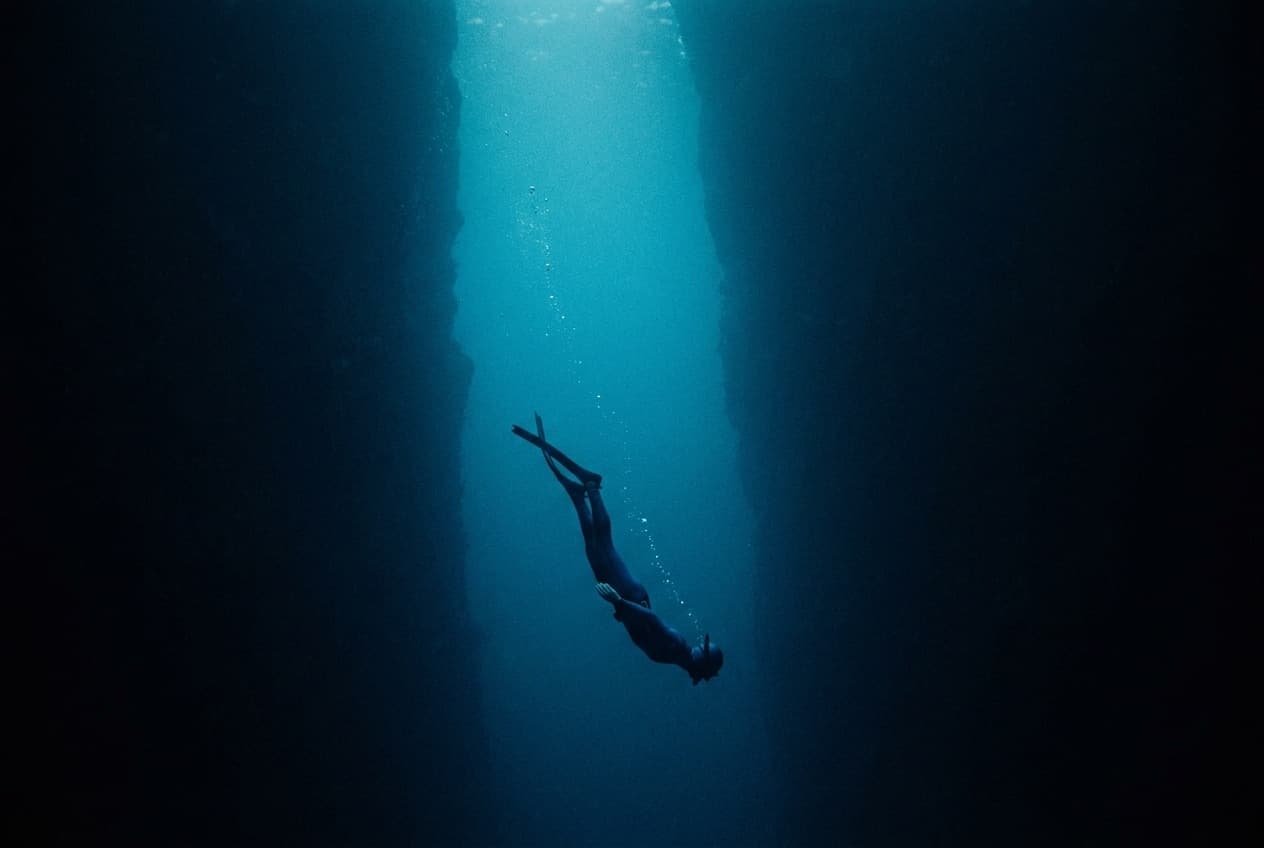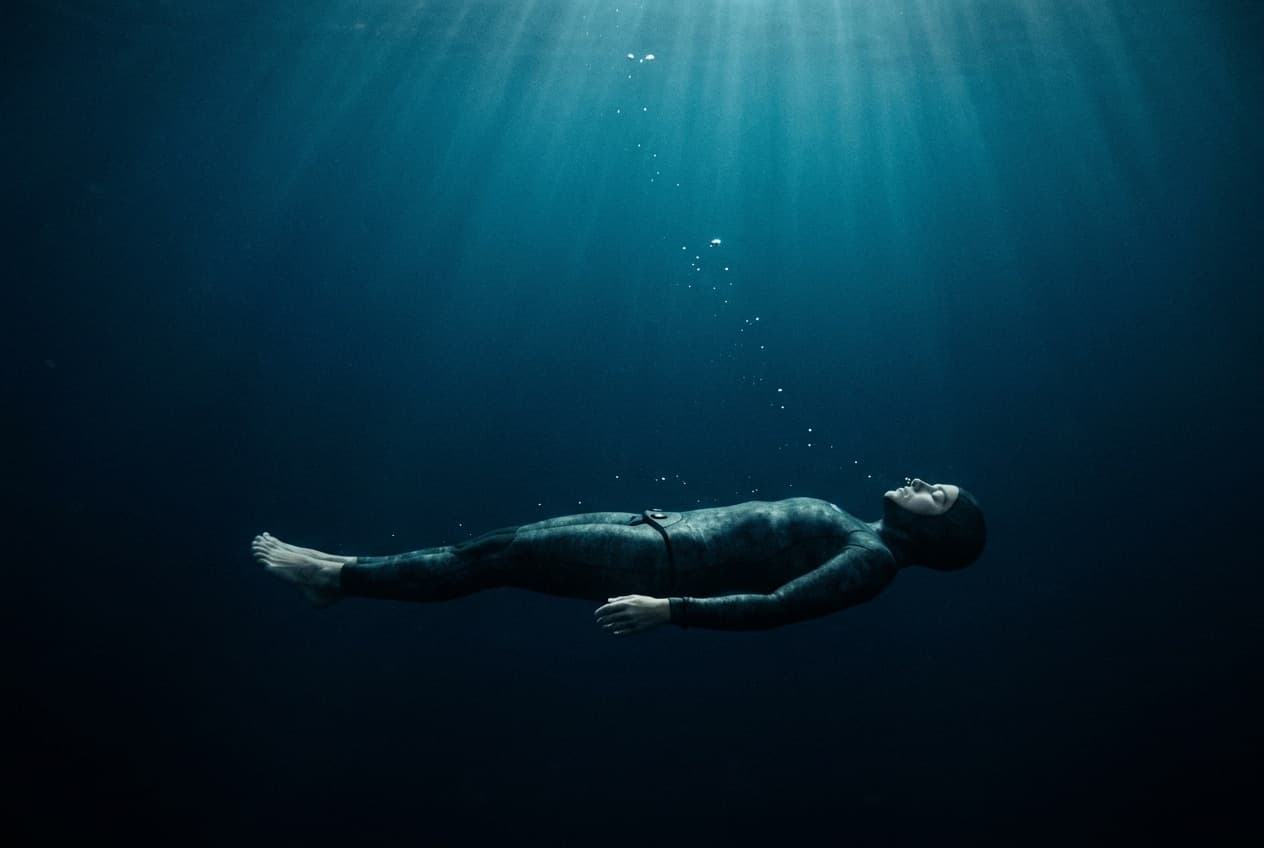
The classic of apnea training: holds stay the same while the rests shrink round by round – down to just 15 seconds.
Your benefit: Round by round your body adapts to rising CO₂ – the urge to breathe becomes familiar and loses its edge.
How the exercise works
- 1.Before you start: breathe calmly and relax your mind. Think only of breathing in – and breathing out twice as long. Ready? Start the exercise (a 10-second preparation follows).
- 2.On the signal, breathe in as deeply as you can and hold until the countdown ends.
- 3.Then take 3–5 deep breaths in and out to recover.
- 4.Calm your breathing and body. The rest gets 15 seconds shorter each round – down to 0:15.
- 5.At “Hold soon”, breathe in deeply and begin the next round.
- 6.All 8 rounds in this rhythm. Too much? End cleanly – that was training too.
The CO₂ table is the best-known exercise in apnea training: eight equal holds while the rests shrink step by step from 1:45 down to just 15 seconds. Because recovery gets ever shorter, your CO₂ level rises round by round – exactly the stimulus that triggers the urge to breathe. Your nervous system learns to tolerate this feeling and stay calm instead of stressing. Choose the level so the final rounds are demanding but cleanly doable, and progress via hold length rather than grit. Two to three sessions per week are plenty – and do not train it on the same day as the O₂ table.
Practise breath-hold exercises on dry land only, never alone in the water, no hyperventilation. Stop immediately if you feel unwell.